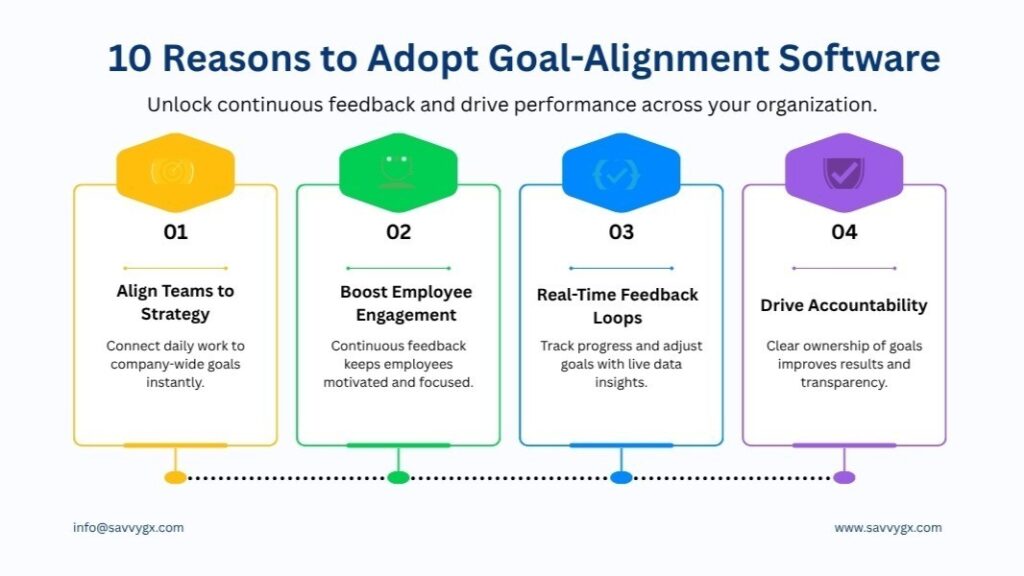
1. Connect Strategy to Execution: Transform strategic objectives into departmental, team, and individual goals so everyone works toward the same priorities.
2. Create Organizational Alignment: Employees understand how their daily work contributes to company success, reducing confusion and conflicting priorities.
3. Improve Accountability: Clear ownership of goals, KPIs, OKRs, and initiatives makes it easier to track responsibilities and outcomes.
4. Enable Real-Time Performance Monitoring: Managers can monitor progress throughout the year instead of waiting for annual performance reviews.
5. Promote Continuous Feedback and Coaching: Regular feedback helps employees improve performance, remove obstacles, and stay focused on priorities.
6. Reduce Appraisal Bias and Surprises: Documented goals, achievements, and feedback create more objective and transparent performance evaluations.
7. Increase Employee Engagement: People are more motivated when they understand expectations, receive recognition, and see their contribution to organizational goals.
8. Simplify HR and Manager Workload: Automation eliminates spreadsheets, manual calculations, email follow-ups, and paperwork associated with performance management.
9. Support Fair Calibration and Rewards: Consistent performance data helps leaders make better decisions regarding ratings, promotions, rewards, and talent development.
10. Drive a High-Performance Culture: Organizations move from an annual appraisal mindset to a culture of continuous performance improvement, learning, and achievement.
Bottom Line
Organizations do not achieve strategy through annual appraisals. They achieve strategy through aligned goals, measurable KPIs, continuous feedback, regular reviews, and effective calibration. Goal Alignment & Cascading Software makes this process visible, measurable, and manageable. #PeopleKPIs #PeopleScore #PeopleOKRs #PeopleMBO #PeopleGoals #Savvygx #PerformanceManagement #StrategyExecution #GoalManagement #BusinessPerformance